
Daryna Mamaisur (Kyiv / Brussels)
1 октября 2026


Eyelashes and Sand Crystals
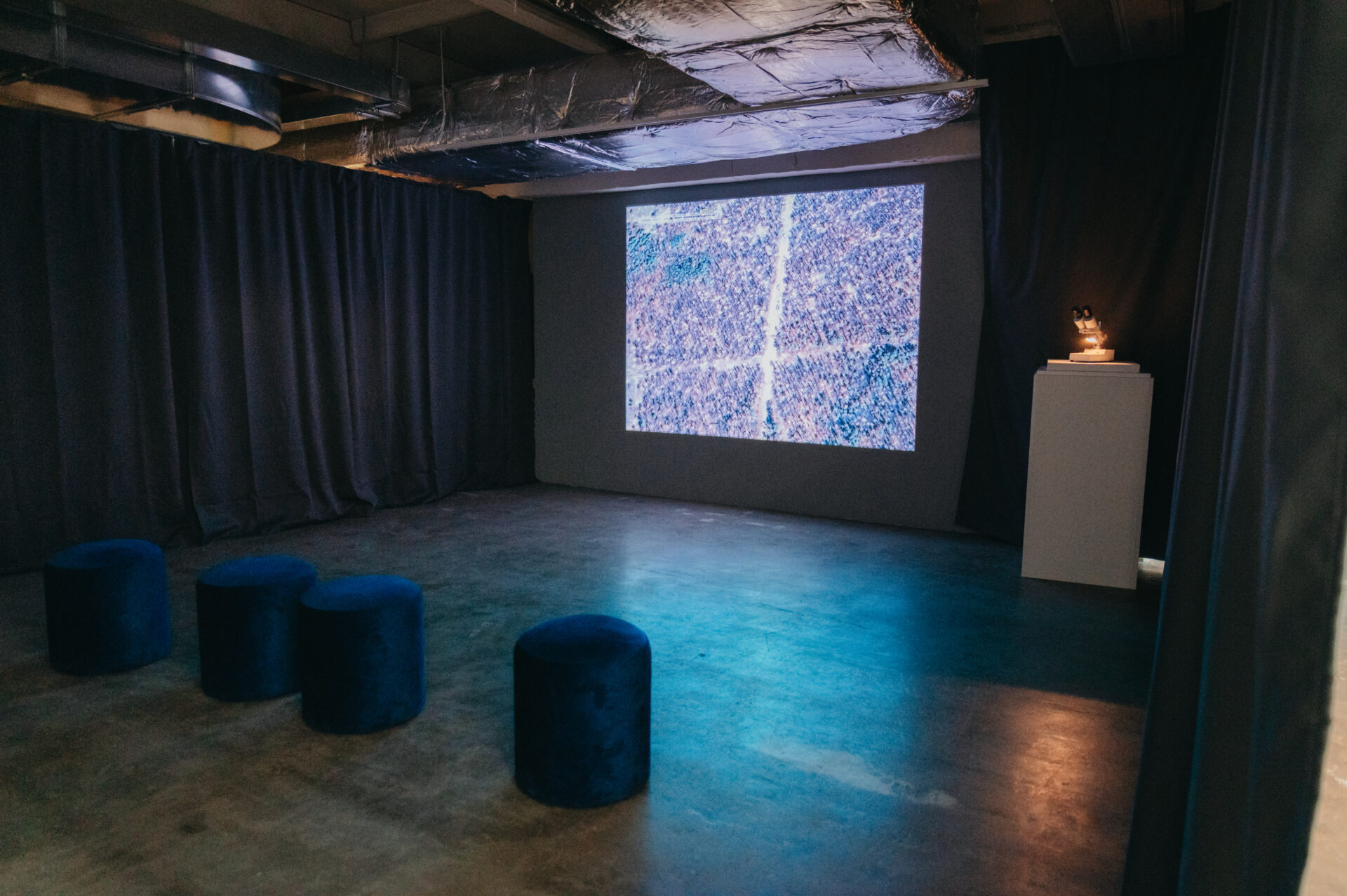
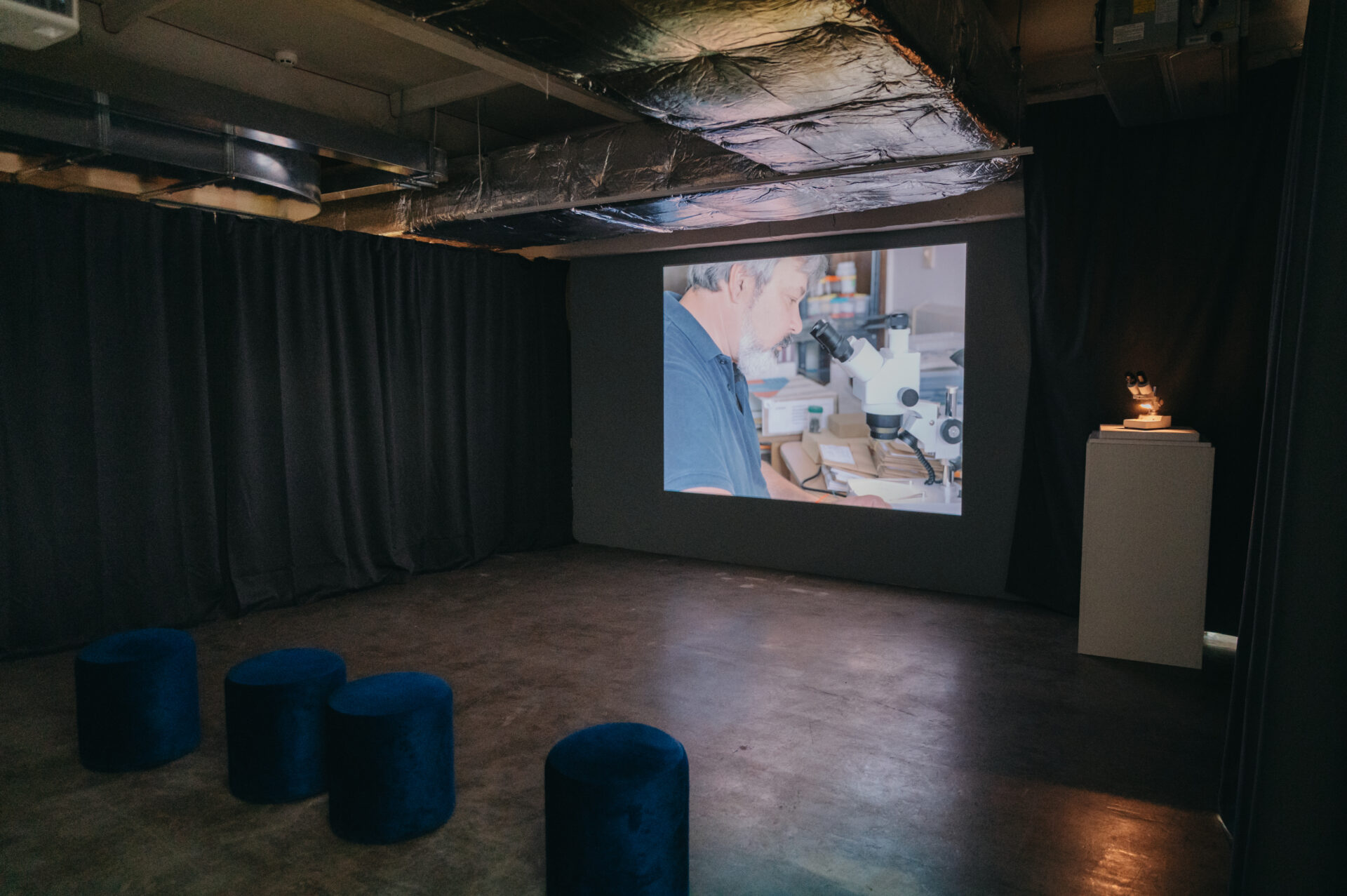
one-channel video installation, 25’
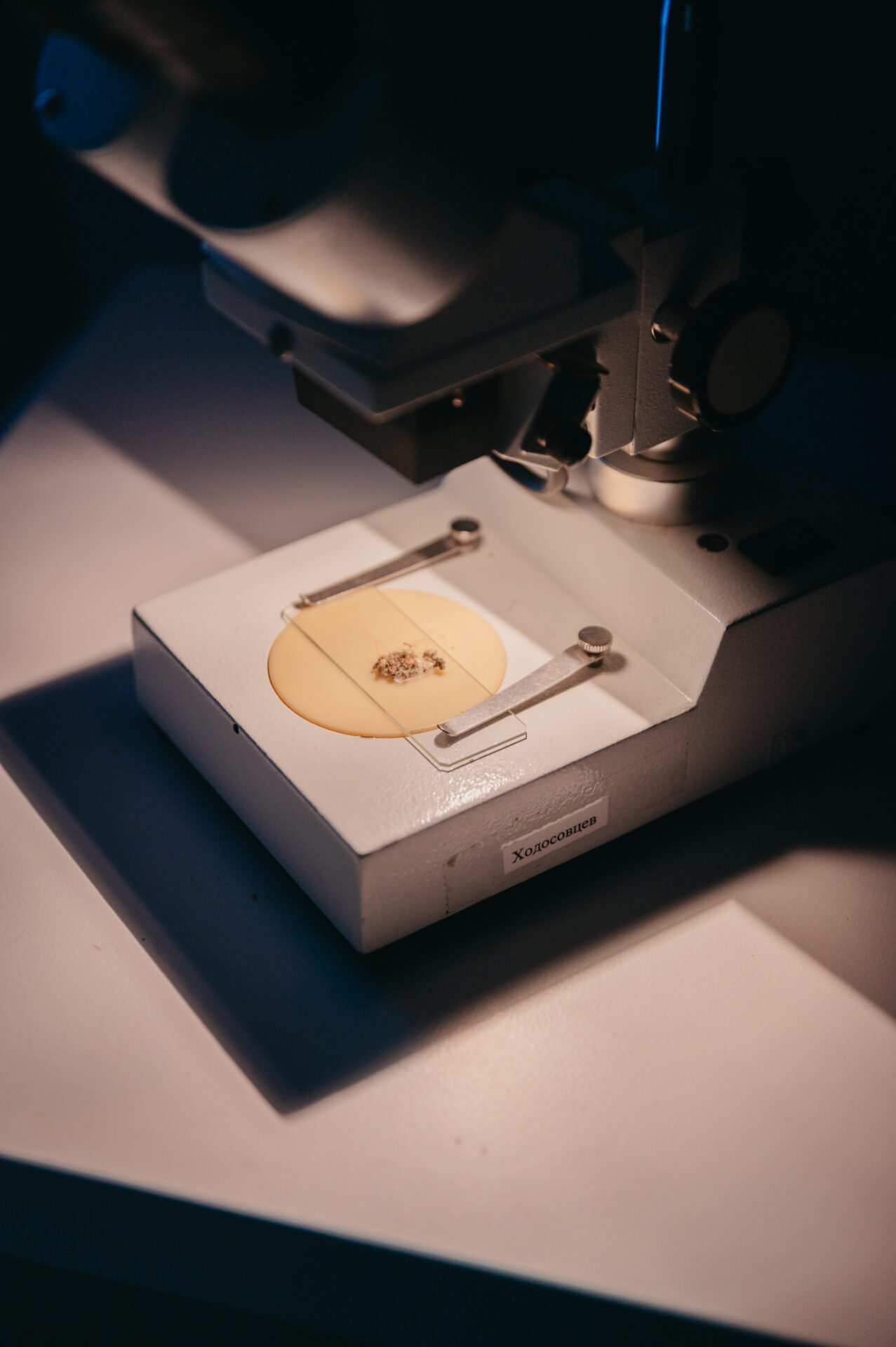
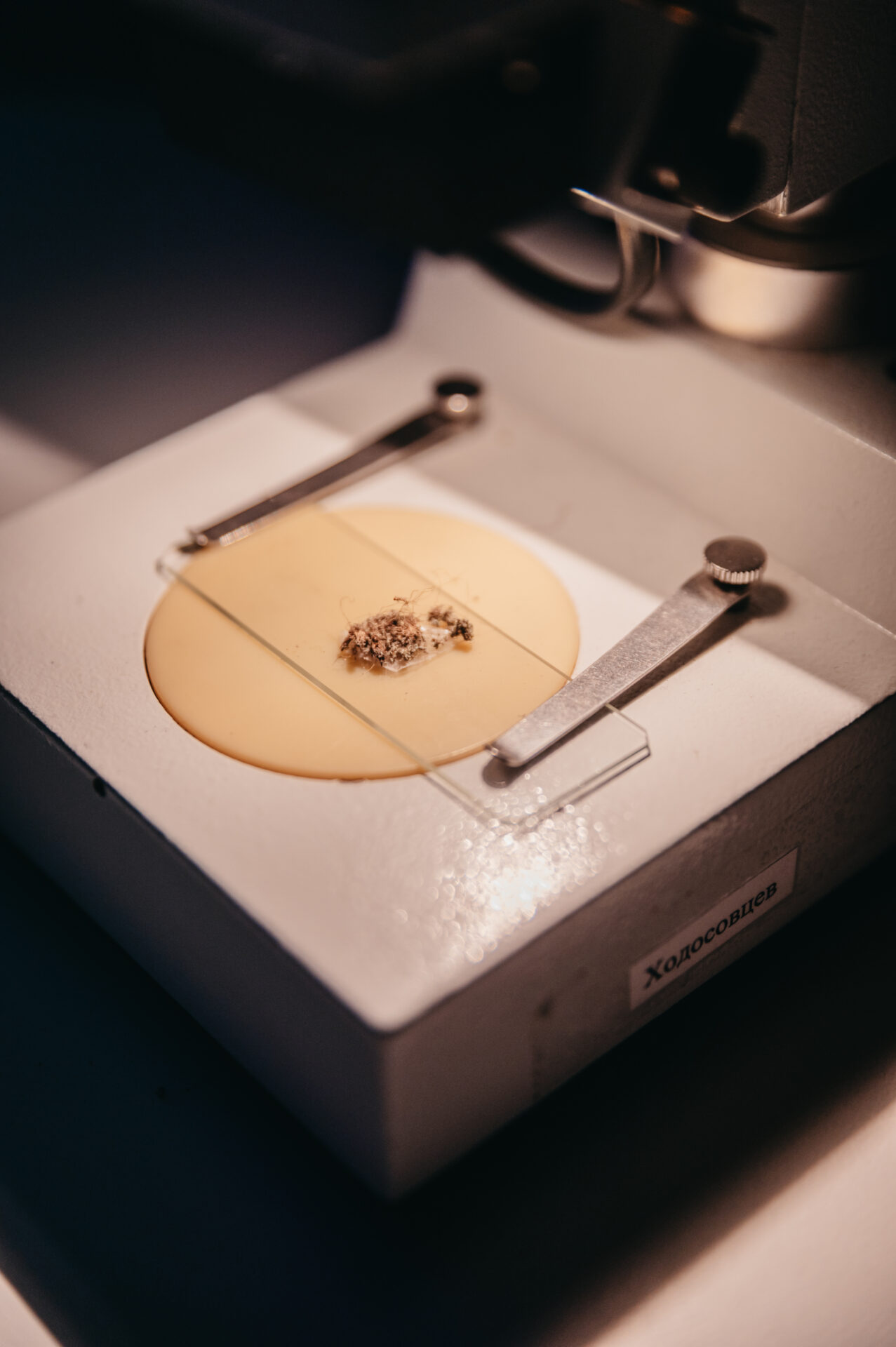
microscope, lichen Circinaria ucrainica
The project began in 2024 through the Ukrainian Ecologies residency and in collaboration with researchers from Kherson State University.
The video was created with the support of the KEY WORK project, RIBBON International, Jam Factory Art Center, Documenting Ukraine, and the Emergency Support Initiative of the Kyiv Biennial.
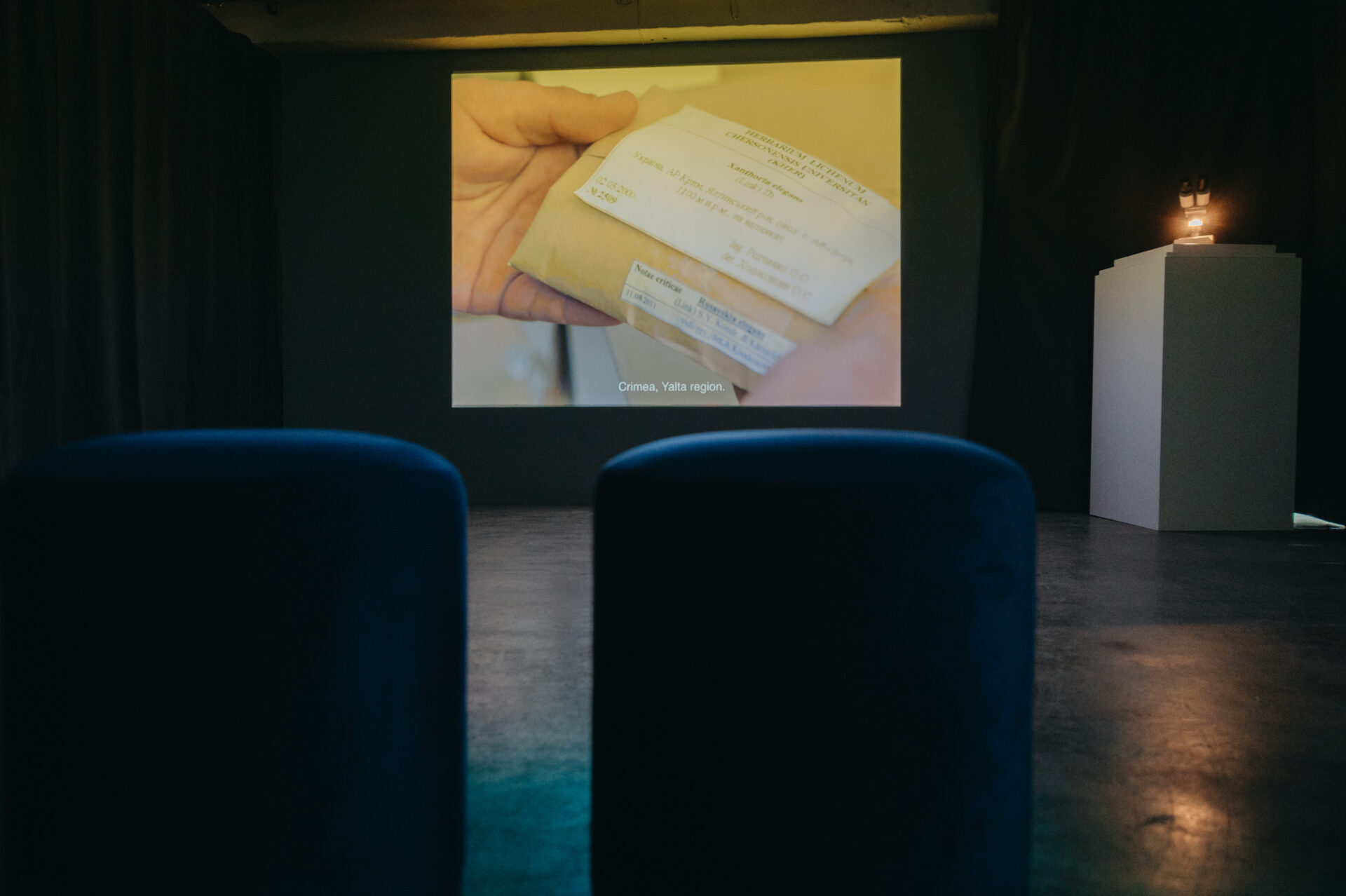
“Eyelashes and Grains of Sand Crystal” is an experimental video essay dedicated to one of the largest scientific collections of lichens, vascular plants, and bryophytes from Southern Ukraine and Crimea, which was evacuated to Ivano-Frankivsk at the end of 2022. The work attempts to visually reflect on the role of the Kherson collection within the distorted temporality of war — a reality in which the present competes with the past and memory itself is under threat. The herbarium specimens refer to an endangered landscape that has become inaccessible to many of us due to war, occupation, and the loss of biodiversity. The story of the herbarium’s evacuation also reveals how displacement can affect not only humans, but other living beings as well. The video combines documentary footage from scientific expeditions and researchers’ work with archival imagery from Soviet films and newsreels, reflecting on the violence that the Ukrainian steppe has endured and continues to endure.
In addition, the project team launched a crowdfunding campaign to help preserve the herbarium. With the support of caring individuals, staff members of the University of Warsaw, and the Ukrainian Environmental Humanities Network, we raised €1,000 and purchased cabinets essential for the proper storage of the herbarium. However, more are still needed. If you would like to contribute to the crowdfunding campaign, you can always get in touch with the author of the video work.
Аrtist’s statement:
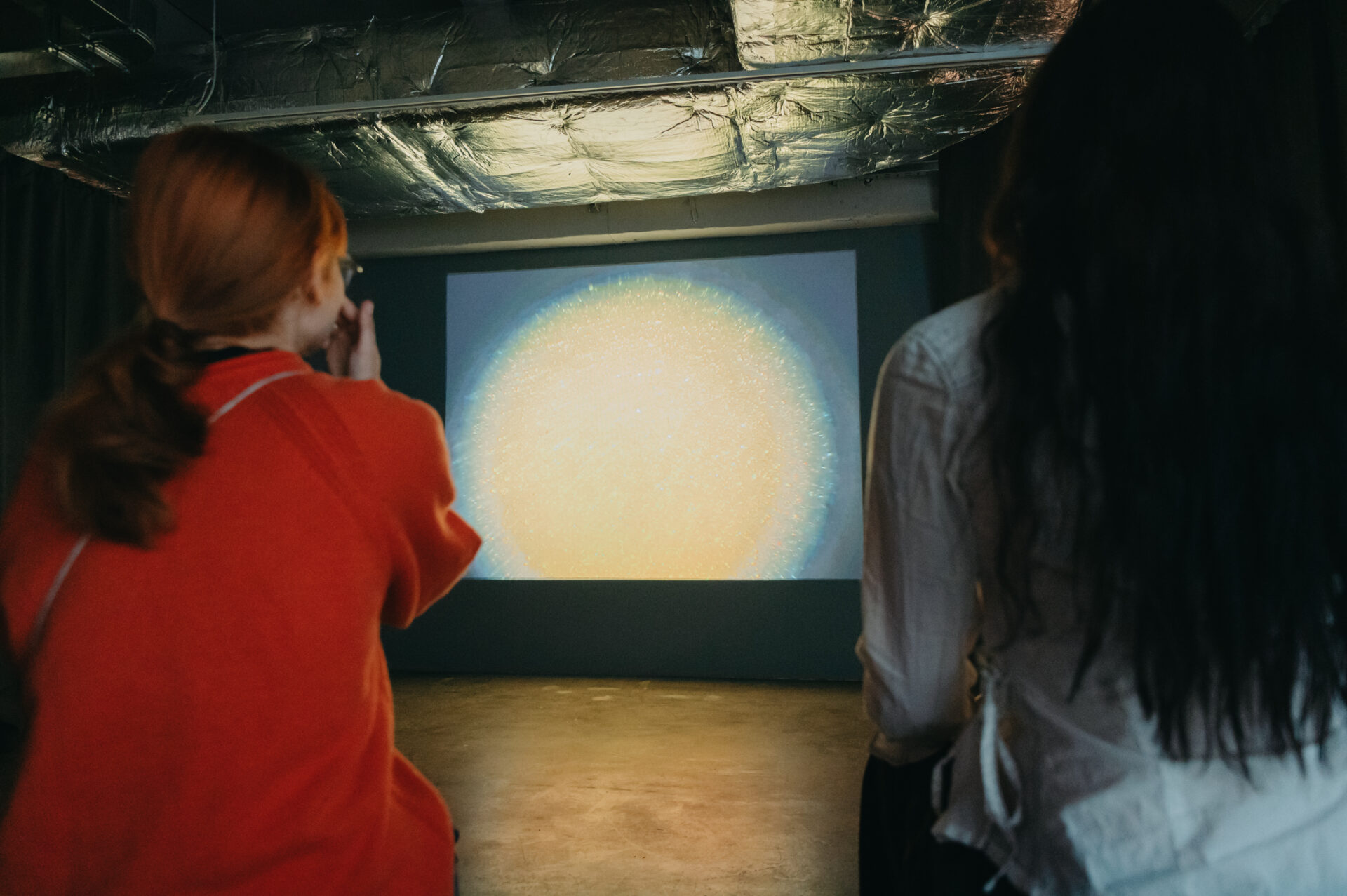
“We are filming in Oleksandr’s rented flat in Kyiv. A botanist from Kherson University, he was relocated here and continues his research, storing newly collected samples in his modest living space. As he shows me some of them, I lean over the binocular microscope. “Do you see the ‘eyelashes’?” he asks. “No, but I see crystals,” I reply. “Ah, that’s just sand from the Oleshky Sands – it’s not important. Focus on the lichen’s structure,” he says. His words left a pinch in my heart. The Oleshky Sands, Europe’s largest semi-desert, are now occupied by Russia, and I don’t know if I will ever have the chance to see them. Circinaria ucrainica, a lichen species new to science, was discovered near the Oleshky Sands shortly before the full-scale invasion. It is currently unknown whether this species survived the flooding caused by the destruction of the Kakhovka Dam. This is the very specimen that can be seen under the microscope.
I have never been to the Oleshky Sands or many other well-known places in the south, but I have travelled enough for some part of me to remain with those beautiful landscapes, towns, and people of that region. Now, with most of the territory under war or occupation, these places exist for many of us who are not on the frontline as an ephemeral entity – left only to memory or imagination. The totality of memory feels oppressive, as it becomes the sole reality we can access when physical presence is impossible. Perhaps this is why I was drawn to the story of the herbarium evacuated from Kherson University. It was a way to reconnect with a lost landscape and to surrender to the unexpected paths of history it might unveil.”
Daryna Mamaisur is a visual artist and filmmaker born in Kyiv, Ukraine. Her practice combines art research, filmmaking, and photography, focusing on transformations of landscape and public space in relation to visual culture, memory, and political ecology. Her recent projects are personal and experimental films on migration, the limits of language, and the complex, intertwined realities of environment and war. In 2022, she graduated from the DocNomads, a joint master’s program in documentary filmmaking, based in Lisbon, Budapest and Brussels. Her films and video works have been screened at international festivals such as Visions du Réel, FIDMarseille, Kassel Dokfest, DOK Leipzig, and RIDM, as well as in art exhibitions addressing environmental and societal issues. Her short films I Stumble Every Time I Hear from Kyiv and Smoke of the Fire were nominated for the DocAlliance Award, with Smoke of the Fire also being nominated for the e-flux Award.
Photographer: Anton Sorochak